
LCPS Builds a Pipeline of Hope, one Brick at a Time
by Heather Lustig-Curran
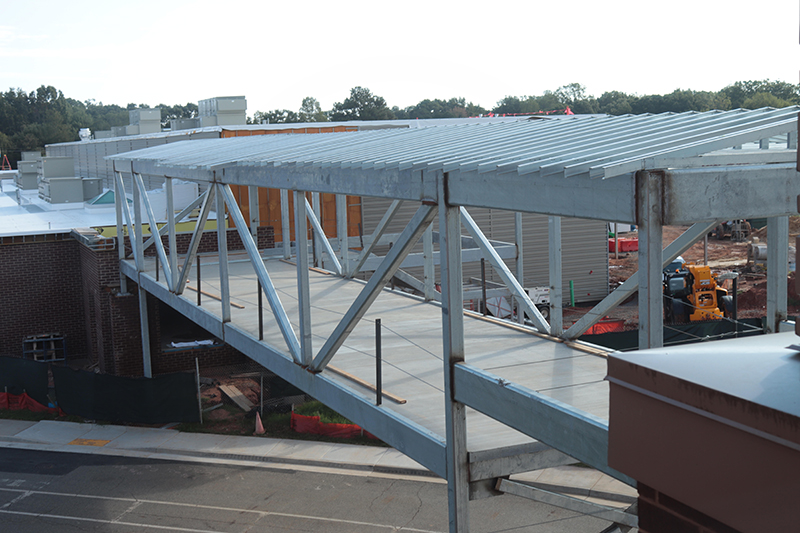
To enable student safety between classroom changes, a sky bridge connects the main high school to the new career and technical education (CTE) addition (photo by Matthew Trivett).
Every May, Louisa County High School (LCHS) graduates walk across a stage, accept their diploma, and snap a picture with the principal. As they return to their seats, though, they also return to the looming question: What’s next?
In September of 2025, the United States Census Bureau released a report cataloguing the percentages of workforce members who hold bachelor’s degrees or higher. As of 2024, 49% of workers had a high school diploma or an associates degree. Another 45% had a bachelor’s degree or higher. With the unemployment rate hovering around 4%, high school graduates face the daunting task of entering into the employment world.
For Louisa County graduates, though, the friends and family questions about the future or the barrage of statistics might not provide as much concern. Already, the high school hosts a burgeoning Career and Technical Education (CTE) program. And when the 2027 school year begins, a brand new CTE center will open that will house both the current and brand new programs being installed in Louisa County Public Schools (LCPS).
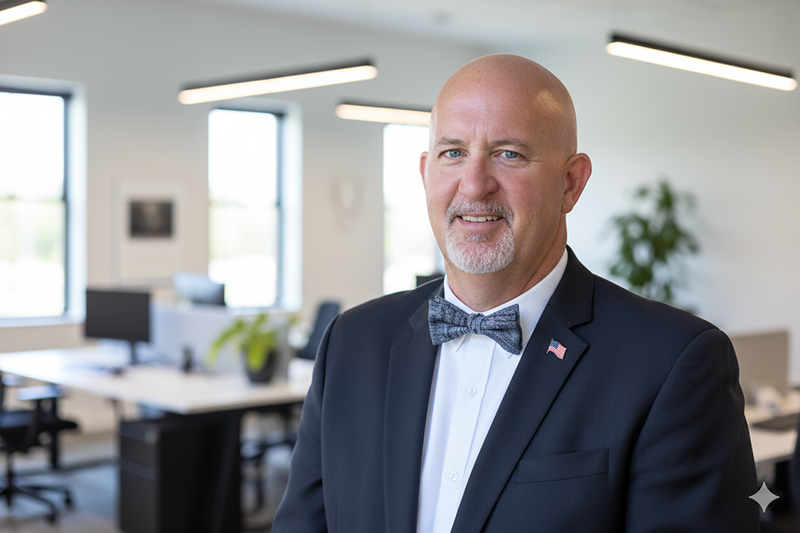
Since 2017, Bo Bundrick, director of career and technical education and workforce development for Louis County Public Schools, has been working to build and enhance the CTE program (photo courtesy of Bo Bundrick).
The History of Career and Technological Education
CTE classes are nothing new to the education system. As early as 1862, with the passing of the Morrill Land Grant College Act, federal lands were set aside, in part, to build “land grant schools” that specialized in agriculture and mechanics. According to the Association for Career and Technical Education (ACTE), the Smith-Hughes National Vocational Education Act of 1917 enabled federal funding for secondary CTE classes. In addition to agriculture, students could be enrolled in “home-making and trade and industrial education” classes.
Flash forward a century, and the 21st century high schooler has a plethora of educational opportunities and certifications to choose from. Even starting at Louisa County Middle School, students can select CTE classes that could be eligible for high school credit.
At the high school level, students have up to 65 class options that are among 14 “career clusters.” Even before graduating high school, students can earn certifications that will help ease their transition into the workforce. Currently, students can learn about, gain hands-on experience with, and potentially receive internships or apprenticeships in fields including nursing, turf maintenance, and automotive maintenance. And the options continue to expand.
When driving down Davis Highway (Route 208) from Louisa to Mineral (or vice versa), one is bound to notice the LCPS complex. Adjacent to the high school is a massive steel and brick structure. In a split design – one half being a single story and the second utilizing an upper-level mezzanine – the new CTE building is the culmination of years of research and development. It embodies Division Superintendent Doug Straley’s promise in the yearly convocation message: “that the students of LCPS are being trained for jobs that haven’t been invented yet.”
“Our mission and vision, here within our school division, is to be a world-class, forward-thinking school division that will be the model of school divisions of the future,” Straley said. “We challenge every student to reach their maximum potential. And the reality is that it looks different for every student.”
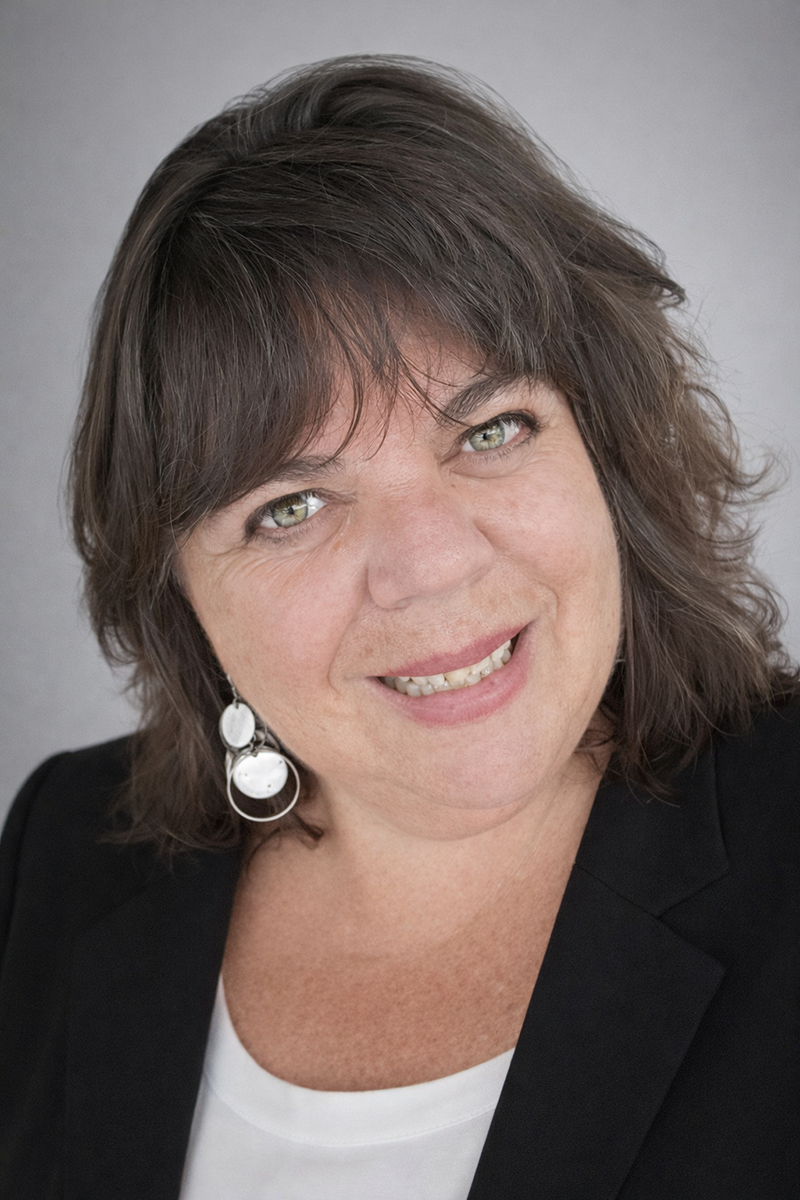
Louisa County Chamber of Commerce Executive Director Tracy Hale Clark has partnered with Louisa County High School to match students with local businesses and nonprofits (photo courtesy of Tracy Hale Clark).
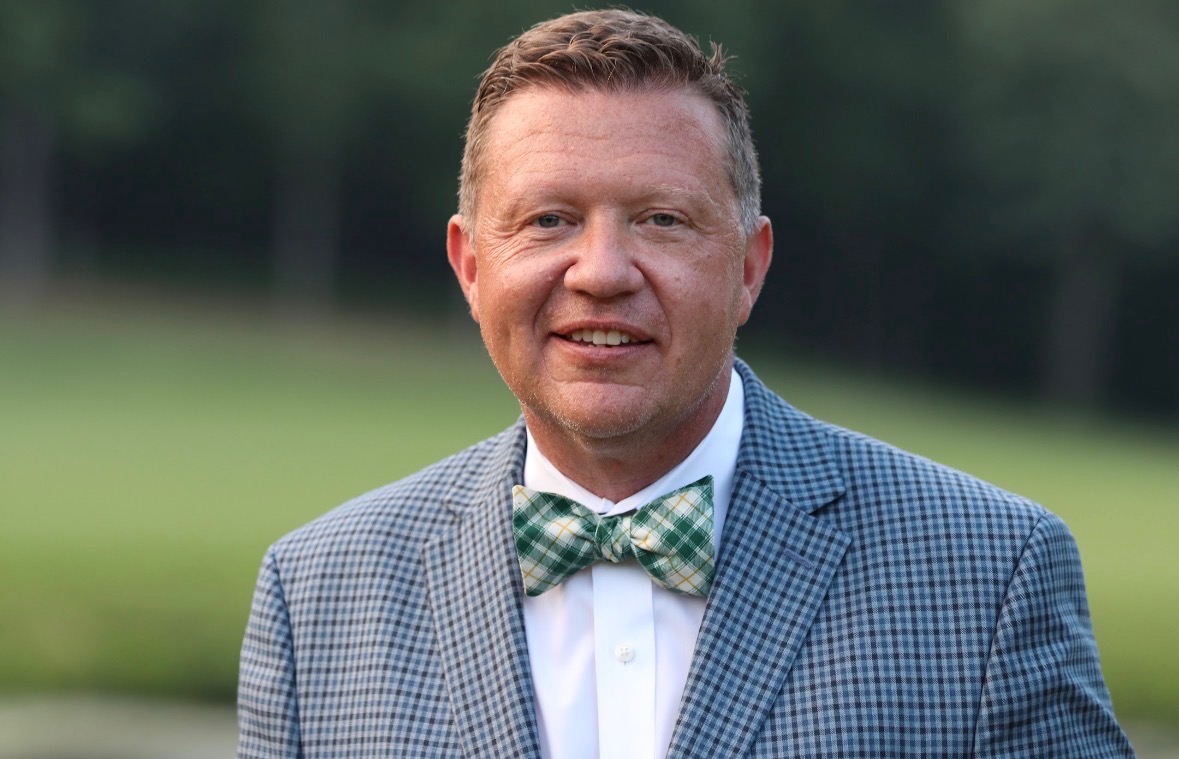
Division Superintendent Doug Straley’s vision is for Louisa County Public Schools to “lead the way” through determination and embracing all avenues toward success (photo by Andrew Woolfolk).
CTE Classes Past, Present, and Future
At the end of the 2024-2025 school year – in a ceremony with the Louisa County Board of Supervisors and Louisa County School Board – Straley and other dignitaries officially broke ground at the CTE building’s future site. Over the course of the 2025-2026 school year, students, faculty, and staff alike watched as the building took shape.
As new windows have been installed and the brick walls have been laid along the exterior, within the new building, new classrooms have been steadily taking shape. And with this new facility, in addition to the current CTE offerings, students will be able to select from new CTE certifications specifically catered for the Louisa area.
“One program that we are excited about is our marine service program,” Louisa County High School Principal Rodney Redd said. “Students have the opportunity to work on boats or personal watercraft. This not only provides a service to our local community, but it also prepares students to be able to go out and get immediate employment, whether part-time or full-time, in our community.”
Future classes and certifications to be offered will include heating, ventilation, and air conditioning (HVAC) and electrical. Furthermore, computer-aided design (CAD) and computer numerical control (CNC) labs will be installed side-by-side so students can design and build tools or materials using up-to-date technology.
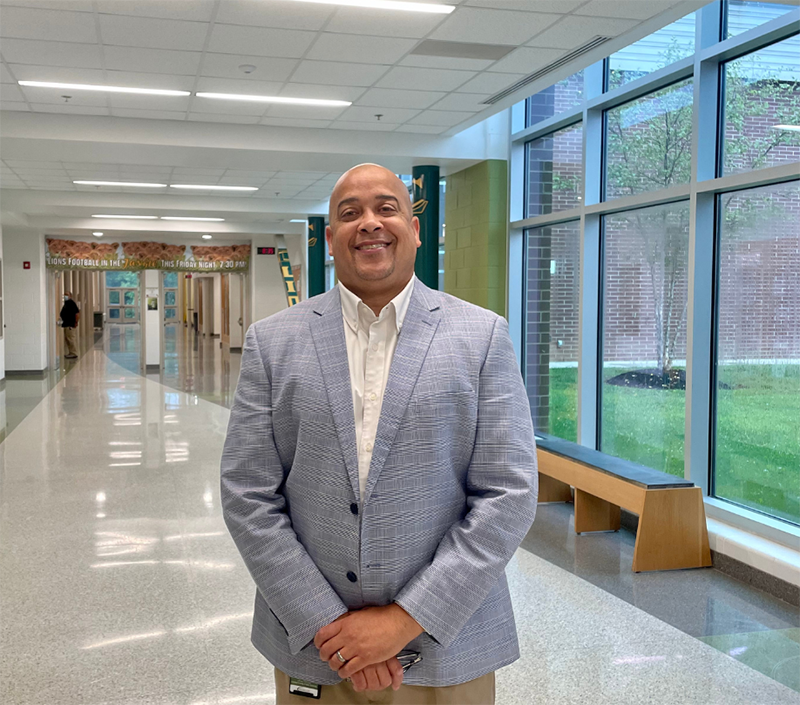
Principal Rodney Redd recognizes the value of the career and technical education (CTE) program and how it benefits students and the community alike (photo by Cassie Duerson courtesy of The Lion’s Roar).
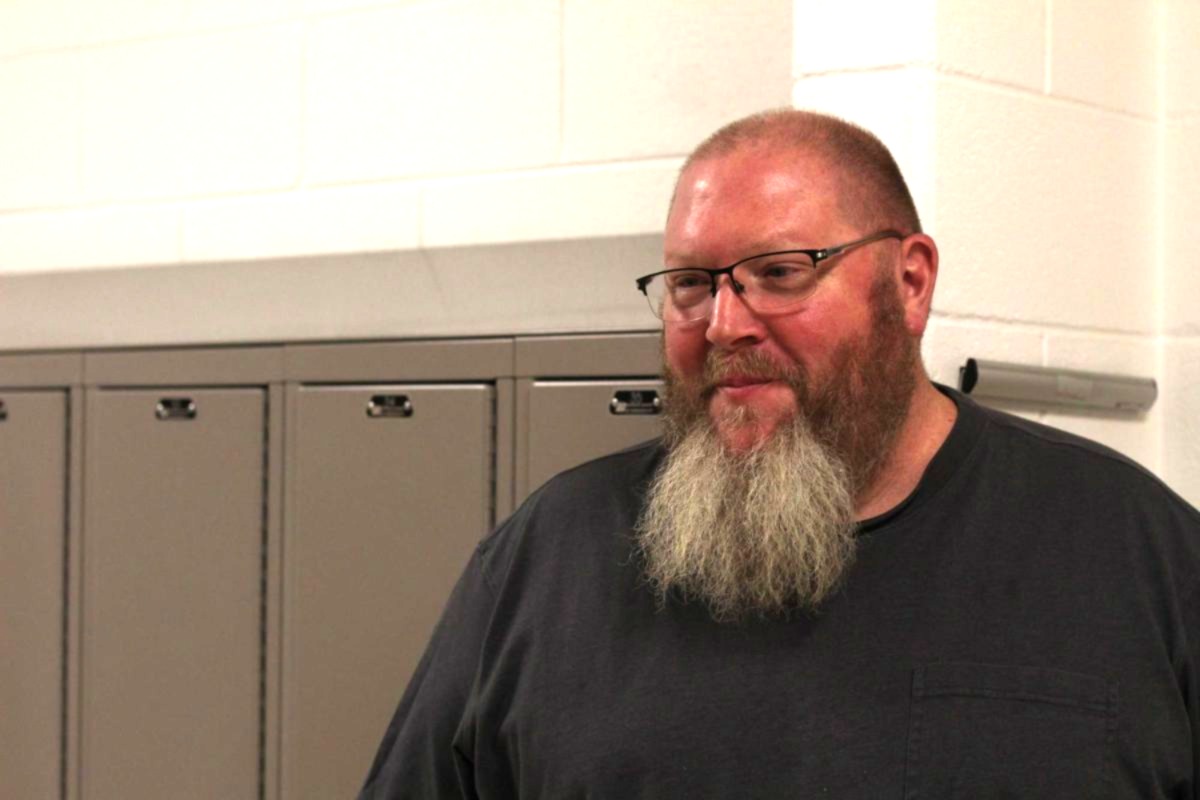
Chef Ben Howell has worked for 10 years as a culinary arts career and technical education (CTE) teacher (photo by Cheyenne Henderson courtesy of The Lion’s Roar).
Aligning with Straley’s projection for the unknown future, the CTE addition has classroom space set aside for future career paths or technology: the flex space.
“There is a space built into the center that is designed for future programming,” Redd said. “It is an opportunity for industry partners and community organizations to come in and tell us what the cutting-edge technology is and what our students need to be preparing for.”
CTE programs have been an integral part of the high school since their inception. Turf students help maintain the athletic fields, and the culinary arts classes have catered events including homecoming. Last year, the automotive classes were recognized for their philanthropic work in helping repair and update a car that was donated to a local family. Similarly, other classes devote time and energy to serve Louisa County residents.
“Two days a week, we go off-campus to provide beauty services to seniors who attend the Betty J. Queen Senior Center,” cosmetology and barbering teacher Tammy Harris wrote in an email. “This allows the students to practice their skills on live models.”
In addition to their community service, LCHS CTE classes strive to bring honor to the county. Over the course of a year, students in CTE classes similar to and including the cosmetology/barbering, hippology (the study of horses), or computer science classes travel across the state to compete in and earn top awards.
“I think what is important is that the students are immediately seeing the benefit of their labor,” Redd said. “It is really hard when the students work on something and they’re not able to immediately turn around and see people, like, for example, eating the food, appreciating the hard work and endeavor that has gone into this.”
The CTE classes, with their emphasis on practical, hands-on learning, enable students to see how their actions can have real-world application. To be a certified CTE teacher, the instructor must have professional experience in their fields so they can impart practical knowledge to their students.
“Skills in my program translate into any business,” culinary teacher and chef Ben Howell wrote in an email. “I teach attention to detail, pride, work ethic, and how to be self-motivated. The ability to make decisions and problem solve in my classes give the students confidence in their abilities, and confidence is needed in any environment.”
The CTE Center’s Future Impact
It’s easy to leave LCHS in the rear view mirror when driving past it, but the school’s impact on the community is extensive. Whether it’s the enthusiasm of the football season’s Friday night lights or the annual toy drives, the high school’s impact abounds, and the CTE center plays a significant role.
Throughout the school year, Bo Bundrick, director of career and technical education and workforce development for Louisa County Public Schools, works with students and their families to guide students into entering the workforce. On Wednesdays, Bundrick works out of a conference room, meeting with students and their parents to discuss career options.
“My role is to make sure that I connect the employers to the student pipeline,” Bundrick said. “Employers call me posting their jobs. I do a site visit, meet with employers, on-board them, and get all their information into our program, a one-stop shop for college and career readiness called Major Clarity. So a student can go in, and he or she can look at jobs that are posted. They contact me. I do a consultation with those students. We set it up with the parents and then call the employer and set up interviews.”
The current CTE classes, along with the new CTE building, answer a need directly within the region. Even with the advent of artificial intelligence, skilled laborers will always be in high demand, and LCPS is working to answer that need.
“The number-one issue that I have heard from the business community since the eight years that I’ve been here has always been the workforce,” Louisa County Chamber of Commerce Executive Director Tracy Hale Clark said. “There is always a need. There’s always a demand for job seekers and workers, particularly in the skilled trades.”
As Louisa County grows, so will the need for a skilled workforce. Straley and Bundrick – along with other education, business, and industry partners – recognize the community’s need. To assist with this, starting with the 2028-2029 school year, LCPS intends to initiate adult-education night classes in the CTE addition.
“This is going to be an opportunity for our adult learners within our community to really branch out and look at a passion they may have that they’ve never been able to explore,” Straley said. “You know, oftentimes we leave high school and think, well, we never could have that opportunity again to take those things. Well, this is going to provide an opportunity for our adult learners to be able to come back and be a part of that.”
Prior to the 2011 earthquake, LCPS was offering adult-education in the form of certified nursing classes. Currently, LCPS is in talks with local community colleges to navigate programming, curriculum, and development. Even General Education Development (GED) test preparation courses might be offered in the future.
“Having a resource right here in Louisa – with the new building and the plans that they have – it’s going to be a game changer, not just for Louisa County, but this whole region,” Clark emphasized.
According to Bundrick, 71% of the 2026 graduating class walked across the stage as an official “CTE Completer.” Those students had completed a minimum of two scaffolded CTE courses and earned the certificate. With the opening of the new CTE center, Bundrick estimates that the percentage will grow.
“Adding additional programming to what we currently offer, I think we’ll probably be hitting the 75% mark of all graduating cohorts who will earn CTE credentials,” Bundrick said. “These programs are career-earning. These students are graduating with something that gives them hope. They know that no matter what, they are going to be able to be successful.”
As the CTE building rises and the sky bridge connects the original high school to the new addition, Straley sees the construction of a pipeline that will serve Louisa County. In a cyclic manner, the county’s students attain an education that gives them a practical, marketable skill. As the older generations of skilled workers retire, LCPS graduates enter into the local job market and sustain the county. And in caring for county residents while using county resources, the county’s economy and community cares for itself and grows.
“My vision for this is to really be able to offer more and more opportunities for our students to be able to find their passion,” Straley said. “They will be able to build a better Louisa community, build a better commonwealth, and build a better country.”
Check out the Latest Issue!
Lake Anna Connections is the premier magazine and business directory serving the entire Lake Anna area.